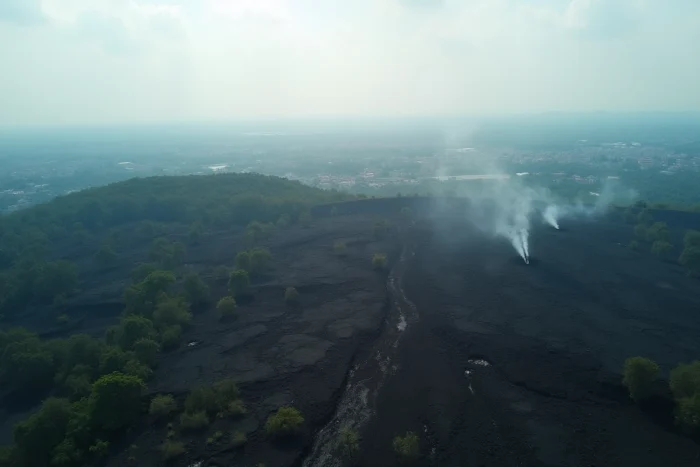
On May 22, 2021, early in the evening, the Nyiragongo volcano erupted without any alert being issued to the population of Goma, the capital of North Kivu in the Democratic Republic of the Congo. The lava flow moved towards the northeast of the city before stopping a few hundred meters from the airport and downtown. The event revived memories of the January 2002 eruption, when the flows had engulfed part of Goma.
Monitoring Capacity of Nyiragongo: A Network Weakened by Conflict
Articles published after the 2021 eruption extensively documented the internet outage at the Goma Volcanological Observatory (OVG) and the absence of an alert on the evening of May 22. What has been less covered is the ongoing degradation of the monitoring network in the following years.
The OVG currently has only five operational stations around Nyiragongo, down from twelve previously. Several stations have been dismantled or made inaccessible due to the occupation of certain areas by M23 rebels. This reduction directly affects the capacity to detect volcano-tectonic earthquakes and magma movements beneath the crater.
The last bulletin from the OVG before the May 2021 eruption, dated May 11, mentioned that the two volcanoes in the region (Nyiragongo and Nyamulagira) were “very active” and reported “some sporadic hybrid earthquakes.” The document specified that this activity “was not yet affecting” inhabited areas. The events that occurred eleven days later showed the limitations of this assessment, conducted with already insufficient means.
Understanding what really happened during the Nyiragongo volcano eruption in Goma requires measuring how well the alert system was functioning in degraded mode long before the disaster.
Human and Material Toll of the May 2021 Eruption in Goma
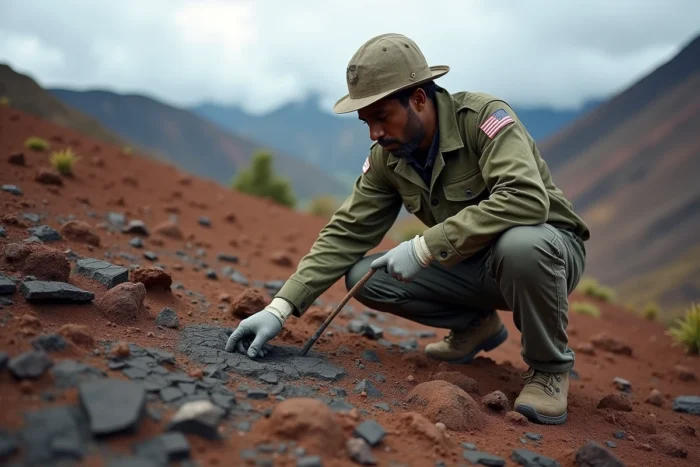
According to the provisional report from the Congolese government, 17 villages were affected and 15 people died, including 5 killed in accidents caused by the population fleeing towards the Rwandan border or to the cities of Bukavu and Sake. More than 3,500 houses, 7 schools, and 4 health centers were destroyed by the lava flows.
The destruction of Goma’s main water reservoir deprived nearly 200,000 people of access to drinking water. Approximately 234,000 people were displaced in the days following the eruption, primarily towards Sake, Minova, and Rutshuru.
UNICEF and its partners were among the first to respond, distributing buckets, jerrycans, hygiene items, and drinking water to the displaced populations in Sake through a rapid response mechanism. The crisis highlighted the fragility of the city’s infrastructure in the face of an event that residents had feared for years.
What Communication Failures Worsened
The absence of an alert from the OVG was not the only problem. The communication from the Congolese authorities was described as chaotic. Evacuation instructions were slow to arrive, and the national radio and television (RTNC) did not relay the information in the early hours.
This disorganization amplified the panic. Thousands of people fled into the darkness, unaware of which direction the lava was advancing. The existing contingency plan proved inadequate for the scale of the situation, and no audit of the alert procedures had been conducted after the 2002 eruption.
- The OVG had been without internet for seven months at the time of the eruption, limiting its ability to transmit real-time data
- Official evacuation instructions only reached the population after the spontaneous flight towards Rwanda and Bukavu had begun
- The natural risk prevention plan, deemed necessary by several analysts, did not exist in operational form at the time of the crisis
Current State of Nyiragongo: What Available Data Says
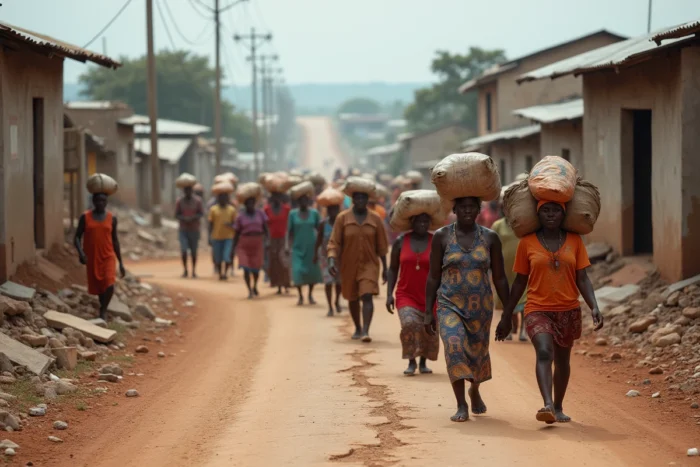
Since the 2021 eruption, Nyiragongo has shown activity marked by continuous degassing of water vapor and sulfur dioxide of low to moderate intensity, with no notable ash plume or lava overflow. This profile corresponds to a classic post-eruptive phase, but the available data do not allow for conclusions about the possible reformation of a lava lake in the crater.
No continuous lava lake has been confirmed since the collapse that occurred after the eruption, despite the spectacular images regularly shared on social media. Field reports vary on this point, and the reduction of the network of stations complicates any reliable assessment of the current threat level.
Superimposition of Volcanic Risks and Armed Conflict in North Kivu
The situation in North Kivu adds a dimension that few active volcanic areas experience elsewhere in the world. The armed conflict in eastern DRC not only makes monitoring more difficult: it also prevents the establishment of functional evacuation corridors and complicates the delivery of scientific equipment to measurement stations.
Goma, a city of over a million inhabitants located on the shores of Lake Kivu and at the foot of Nyiragongo, thus accumulates a permanent volcanic risk and chronic security instability. The question of the population’s preparedness for a future eruption remains open, especially as rapid urban growth pushes housing into areas exposed to flows.
Nyiragongo remains classified among the most dangerous volcanoes on the African continent, not only due to its geological activity but also because the human, institutional, and security conditions surrounding it make each eruption potentially more destructive than the last. The next alert, if it can be issued, will find a more populated city and a reduced monitoring network compared to May 2021.