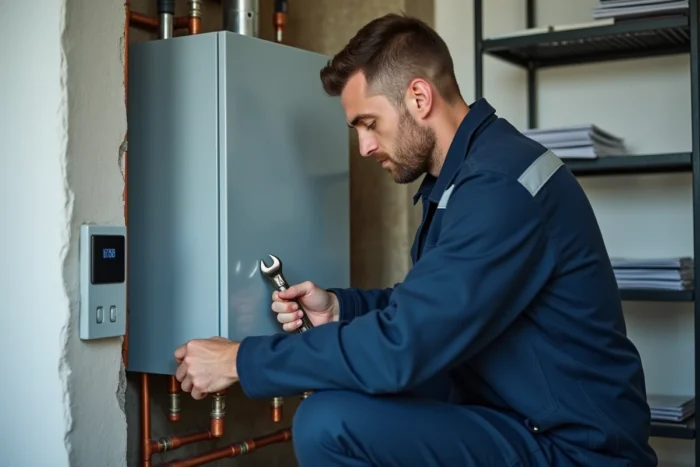
In Brussels, the majority of old housing still operates with a gas boiler. When it breaks down or ages, the question arises: should it be replaced with a similar model or should the system be changed? Gas heating in Brussels is going through a pivotal period, between stricter regulations and less favorable taxation.
21% VAT on gas boilers: the fiscal signal of 2025
Before discussing the technical aspects, let’s look at what has changed in terms of finances. Since July 29, 2025, the specific part of a heating installation powered by fossil fuels (boiler, burner, integrated regulation) has increased from 6% to 21% VAT across Belgium.
In practical terms, replacing a gas boiler now costs significantly more than it did a year ago. Non-specific elements like radiators or piping can remain at 6% if renovation conditions are met, but the main item, the boiler itself, is subject to the full rate.
This tax shift changes the equation for anyone questioning the relevance of gas heating in Brussels in 2025, especially in light of heat pumps that still benefit from regional subsidies and a reduced rate at installation.

Gas boiler in an existing building in Brussels: what remains allowed
Do you live in an apartment or a house that has already been built? Replacing a gas boiler remains legal in existing buildings. This is a point that many homeowners confuse with the prohibition that applies to new constructions.
Since early 2025, the installation of new gas boilers is prohibited in new constructions in Brussels. For existing buildings, the situation is different: a new gas boiler can still be installed, provided it meets current standards.
Type B1 atmospheric devices: a technical nuance
The Brussels-Capital Region has also restricted the installation of B1 atmospheric gas devices. These boilers, which draw air directly from the room where they are installed, pose safety issues (risk of CO backflow) and efficiency problems.
If your home is equipped with such a model, replacing it with a sealed combustion chamber device (type C) is the norm. This constraint is not new, but it now combines with the VAT increase to make identical replacement less attractive.
Real cost of gas versus heat pump: a misleading comparison
Comparing gas and heat pumps solely based on purchase price is misleading. Why? Because the two systems have different prerequisites.
- An air-water heat pump operates optimally in a well-insulated home with low-temperature emitters (underfloor heating, oversized radiators). In an old Brussels house with small cast-iron radiators, efficiency drops.
- A condensing gas boiler adapts to the existing radiator network without major renovations. This is often why owners of old buildings still choose it.
- The hybrid system (heat pump coupled with a condensing gas boiler) allows for covering cold spikes with gas and using the heat pump the rest of the time. This is a compromise that Brussels regulations allow in existing buildings.
The choice primarily depends on the insulation condition of the home. Installing a heat pump in a thermal sieve is like heating the street with electricity, which does not reduce either the bill or the carbon footprint.
Brussels regulatory calendar: what is planned after 2025
The Brussels-Capital Region has adopted a logic of progressive prohibitions. Oil has already been banned in new installations for several years. Gas is following a similar but delayed trajectory.
For existing buildings, no total gas ban date has yet been set. Current regulations encourage the transition through economic levers (VAT, subsidies aimed at renewables) rather than through a sudden prohibition.
PEB obligation and impact on boiler choice
PEB (Energy Performance of Buildings) requirements are gradually tightening in Brussels. A homeowner renovating must meet certain energy thresholds. Installing a gas boiler alone does not always satisfy these requirements, especially if the building envelope is not improved simultaneously.
- Insulating walls and roofs remains the most effective lever to reduce consumption, regardless of the heating system.
- The Renolution subsidies in Brussels cover part of the insulation work and the installation of renewable systems, but not the replacement of a gas boiler with another gas boiler.
- A prior energy audit allows to determine if the home can accommodate a heat pump or if gas remains the most realistic transitional solution.
The trap would be to invest in a new gas boiler without addressing insulation, only to have to reinvest a few years later to comply with future PEB requirements.
Gas in Brussels in 2025: transitional solution or dead end?
For a Brussels homeowner whose property is poorly insulated and equipped with high-temperature radiators, replacing the gas boiler with a condensing model remains a pragmatic short-term option. The system works, the investment is manageable, and the prohibition does not yet apply to existing buildings.
However, considering this replacement as a solution for the next twenty years would be optimistic. The regulatory trajectory, taxation, and energy price trends all point in the same direction: a gradual exit from fossil gas. Planning the building’s insulation at the same time as the boiler replacement keeps the door open for a heat pump in a few years, without being stuck with an obsolete system.