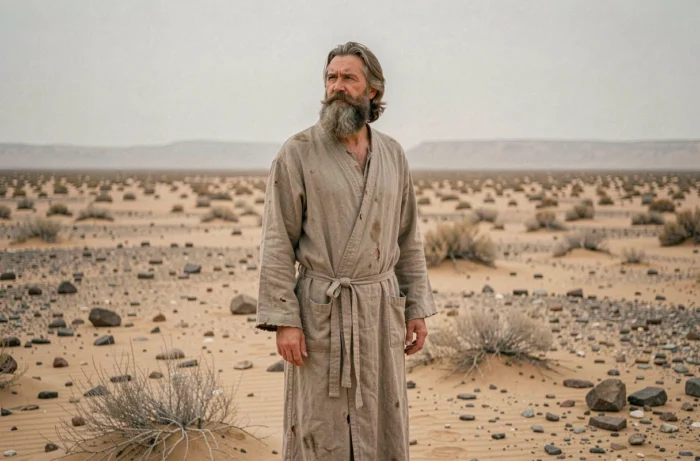
When Netflix announces the cancellation of a series after just one season, fans often hope for a turnaround. For Messiah, that turnaround never happened, and several years after the show’s cancellation, there are no signs pointing to a return. The series created by Michael Petroni, featuring Tomer Sisley as Aviram Dahan, remains stuck on its single season despite a final cliffhanger that clearly called for a sequel.
Cancellation of Messiah and health context: what really happened
It is often said that the coronavirus crisis killed season 2. The reality is more nuanced. Netflix had initially confirmed the renewal before backtracking. Filming a sequel was considered, but the pandemic froze productions worldwide in spring 2020.
The problem is that other Netflix series suspended at the same time eventually resumed. Messiah did not. The health crisis served as a trigger, not a unique cause. When the sets reopened, the platform simply did not revive the project.
Tomer Sisley himself addressed this topic in an interview, describing this cancellation as a great professional regret. He described a series that was “particularly well-written,” and its abrupt halt left a mark on him. For those who want to understand in detail why season 2 of Messiah on Netflix never came to be, the reasons go far beyond just the pandemic factor.
Religious and geopolitical controversy surrounding the series Messiah
From its broadcast, Messiah sparked strong reactions in several countries. The pitch (a man presenting himself as a new messiah, facing issues related to the Middle East and the Islamic State) touched on explosive religious and political subjects.
Three dimensions simultaneously influenced the perception of the series:
- The direct media controversy: petitions circulated even before the release, demanding the cancellation of the program for infringing on religious beliefs, in several communities around the world.
- The reputational risk for Netflix: programming a series that generates diplomatic and community tensions represents a cost-benefit calculation that the platform coldly evaluates, especially when the viewership does not compensate for the controversy.
- The constraints of global programming: Netflix distributes its content in nearly 200 countries. A series perceived as offensive in certain regions complicates the platform’s international expansion strategy.
These three factors, rarely distinguished in articles addressing the topic, likely converged to make any revival even more improbable once the production window closed.
Intellectual property and production rights: the invisible lock
There is much talk about the fans’ desire, the showrunner Michael Petroni’s wish to continue the story, but a concrete obstacle is often overlooked: the issue of production rights. Netflix typically finances and holds the exclusive broadcasting rights to its original series. As long as the platform does not relinquish these rights, no other studio or streaming service can take over the project.
Michael Petroni has publicly expressed his desire to continue the story. Fans have launched numerous campaigns on Instagram and social media demanding a new season. Nothing has worked. Without a rights transfer from Netflix, the project remains blocked, even if a competitor were interested.
This situation is not unique to Messiah. Other canceled Netflix series find themselves in the same predicament, with rights remaining with the platform without exploitation or resale. The difference is that for such a controversial series, potential buyers are even rarer.
Messiah compared to other canceled Netflix series: a unique case
Netflix regularly cancels series after one or two seasons. The lists of canceled programs grow longer each year. Some receive a late reprieve (we have seen series announced as canceled ultimately renewed after fan mobilization or reevaluation of audience figures).
Messiah does not fall into this category. The combination of factors that led to its cancellation places it in a unique position:
- An active geopolitical and religious controversy, which discourages any revival.
- A health context that provided a reason for cancellation without Netflix having to invoke the controversy.
- A complete absence of official communication since the cancellation, whereas other projects at least benefit from ambiguous statements leaving the door ajar.
- No credible rumors of revival by another broadcaster have emerged since the cancellation.
In comparison, controversial series that are less sensitive on a religious level have sometimes found a second life elsewhere. For Messiah, the cumulative obstacles make this scenario highly improbable.
Netflix strategy and sensitive series: an underlying trend
The platform has gradually refined its policy regarding content with high potential for controversy. Investing in a series that generates international tensions no longer aligns with the positioning of a service seeking to maximize its subscriber base in all regions of the world.
Netflix now favors unifying franchises over divisive projects. This strategic direction, confirmed by the renewals and cancellations observed in recent years, explains why Messiah has never been back on the table, even when production conditions returned to normal.
The showrunner dreamed of answering the questions left hanging by the season 1 finale. Fans continue to comment and share their frustration. The series maintains a loyal community, making the absence of a sequel all the more remarkable. But in the current streaming economy, the loyalty of a niche is not enough when the reputational risk outweighs the audience benefit. Messiah will likely remain a one-season series, suspended by a cliffhanger that no one will come to resolve.