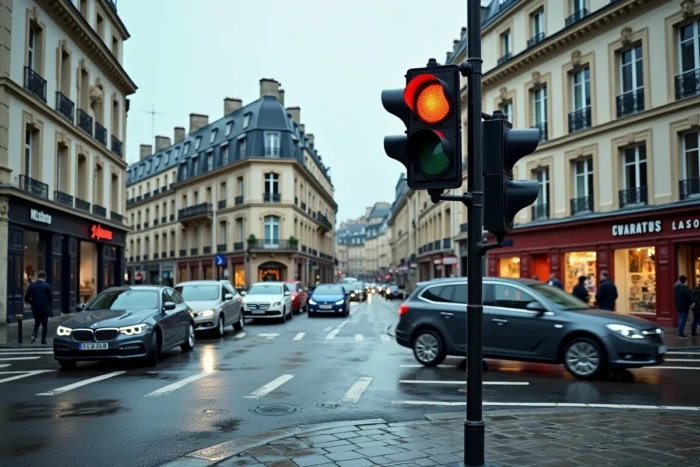
We arrive at an intersection, the three lights are off, no illumination. Cars slow down, some proceed, others hesitate. This situation, common after a storm or a power outage, turns an ordinary crossing into a tense zone. Knowing how to react to a malfunctioning traffic light prevents both collisions and wasted time.
Sign under the off light: the detail that changes the priority
The first reflex to adopt is not to look at the other drivers, but to check if there is a sign under the light. A stop or yield sign fixed below the unit remains active even when the light is out of service. This is often forgotten because normally, we only look at the color.
If a stop sign is present, we stop and let others go. If a yield sign is installed, we slow down and yield to vehicles already in the intersection. Without any additional signs, the intersection defaults to the rules of the road: priority to the right applies strictly.
When wondering what to do if a traffic light is out, it is this check of the sign that conditions everything else. A driver who runs a hidden stop under an off light engages their responsibility exactly as if they had run a standard stop sign.
The distinction also applies to a flashing orange light, which is not a malfunction per se. This mode means that the intersection is operating in a degraded state (often at night on less busy roads). You can pass the signal, but with increased caution and by respecting priorities.
Malfunctioning traffic light: who to call depending on the situation
Not all malfunctions warrant the same call. An out light on a small residential street does not require the same response as a malfunction on a busy road on market day.
Malfunction without immediate danger
The intersection is calm, visibility is good, users self-regulate. In this case, report the malfunction to the town hall or the municipal road service. Most cities have a technical number accessible during the day. Calling the town hall allows for maintenance services to intervene without mobilizing law enforcement.
Risk of collision or heavy traffic
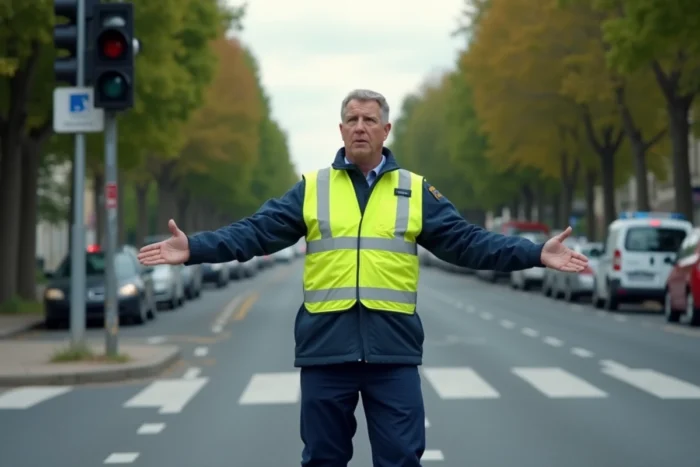
If the intersection becomes chaotic (multiple directions, reduced visibility, vehicles entering at the same time), call 17 (police or gendarmerie). Officers can send a patrol to manually regulate traffic while waiting for repairs.
Accident already occurred
If a collision or personal injury has occurred due to the malfunctioning light, call 112 or 15 depending on the severity. 112 works from any phone, even without a SIM card, and redirects to the appropriate service.
Here is a summary of the numbers based on the context:
- Town hall or road service: malfunction observed without urgency, report for maintenance
- 17 (police/gendarmerie): dangerous intersection requiring human traffic regulation
- 112 or 15 (SAMU): ongoing personal injury accident related to the light malfunction
- 18 (fire department): if a vehicle is immobilized in a dangerous position or if injured persons are trapped
Behavior on the ground: mistakes that cause accidents
The malfunction itself rarely causes the accident. It is the behavior of drivers in the absence of signals that creates the risk. A few situations recur regularly.
The first mistake is to maintain speed assuming that others will stop. Without a light, no one has a clear signal. Slowing down significantly as you approach the intersection is the only appropriate response, even if you think you have priority.
The second mistake concerns pedestrians. When the pedestrian light is also off, foot users often cross without guidance, sometimes without looking. As a driver, you must anticipate this behavior and reduce your speed well before the crosswalk.
The third trap: following the vehicle in front without assessing the situation yourself. Just because one car has crossed does not mean the way is clear for the next. Each vehicle must come to a stop and independently check the conditions for crossing.
Effectively reporting the malfunction to expedite repairs
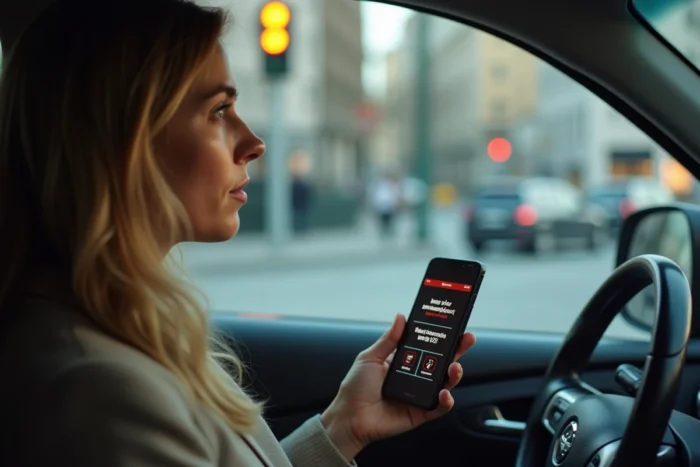
A vague call like “the light is not working on Rue de la Gare” slows down the intervention. Technical services need precise information to send the right team with the right equipment.
When reporting, you should communicate:
- The exact address of the intersection, or if not available, the two streets that intersect
- The type of malfunction observed: light completely off, stuck on a color, or flashing orange
- The level of traffic at the time of the call (smooth, dense, saturated)
- The possible presence of stop or yield signs under the lights
Feedback varies on this point, but some municipalities also offer online forms or citizen reporting apps for this type of anomaly. The channel depends on the installation and size of the city.
Traffic lights malfunctioning abroad: different reflexes to know
When traveling, a malfunctioning traffic light can pose an additional problem: you do not know the local priority rules or the numbers to call. Conventions are not universal. In some countries, an off light gives priority to the most engaged vehicle; in others, the intersection becomes an “all-way stop” where everyone takes turns.
The Canadian government reminds, for Brazil for example, that emergency services are contacted via specific numbers (190 for police, 192 for medical assistance, 193 for firefighters). Checking local emergency numbers before departure is part of trip preparation, just like insurance or an international license.
112 remains the European emergency number, functional in all EU countries. For destinations outside Europe, a geolocated emergency app on your phone can make a difference when faced with an unregulated intersection in an unfamiliar city.
In the face of a malfunctioning light, the right reaction comes down to two things: adapting your driving to the intersection as it is (not as it should be) and contacting the right person without waiting for someone else to take care of it. The sign under the light, the town hall number in your phone, the systematic slowing down: these are simple gestures, but they are the ones that prevent accidents.