
A thermal string trimmer is a gardening tool equipped with a gasoline engine that drives a rotating cutting line. This line slices through grass and vegetation where the mower cannot reach: along walls, around trees, and between flower bed borders. The choice of the right model depends on the area to maintain, the type of vegetation, and the frequency of use.
Gas, battery, or corded electric motor: what really changes
The type of motor determines both the autonomy, the weight of the tool, and the type of terrain accessible. A gas engine runs on gasoline (often a mix of oil and gasoline for two-stroke engines). It offers limited autonomy only constrained by the tank, making it suitable for large gardens or plots far from an electrical outlet.
A corded electric model remains lightweight and quiet, but the length of the cable restricts the working radius. The battery-powered trimmer sits between the two: cordless, relatively quiet, but limited by battery capacity.
The gas model stands out for its superior power on dense grass and tough vegetation. In contrast, it is heavier, requires regular mechanical maintenance (spark plug, air filter, carburetor), and produces more noise. For classic lawn borders in a small area, a battery model is more than sufficient. The gas model makes sense when the garden exceeds a certain size or when tall grass resists the fine lines of electric models.
Detailed comparisons between gas models are available on coupebordurethermique.fr, allowing you to compare technical specifications before making a purchase.
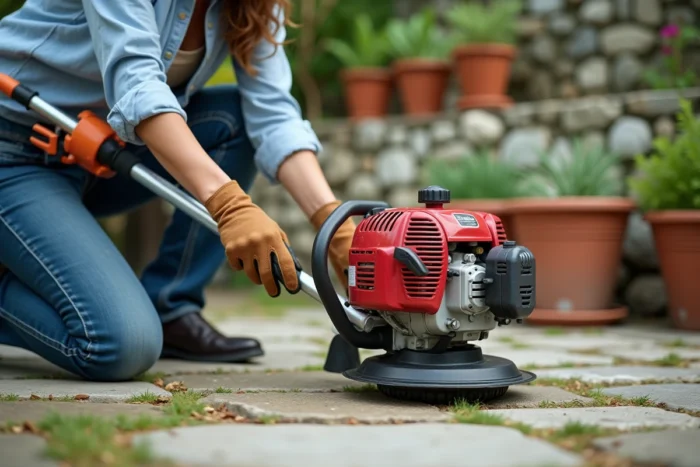
Power and displacement of a thermal string trimmer: reading the right values
The power of a thermal string trimmer is expressed in watts or horsepower, but it is the engine displacement (in cm³) that provides the most reliable indication of its cutting capacity. A modest displacement is suitable for regular maintenance of lawn edges. A higher displacement allows tackling thick grass, brambles, or light brush, approaching the territory of a brush cutter.
The boundary between a string trimmer and a gas brush cutter is not always clear. Some models accept both a cutting line and a metal blade, making them versatile. The price increases with displacement and versatility, but an oversized tool for simple borders will be unnecessarily heavy and fuel-hungry.
Cutting line: diameter and profile
The line is the main wear part. Its diameter directly influences the cutting capacity:
- A thin line (around 1.6 mm) is sufficient for soft grass along a path or flower bed.
- An intermediate diameter line tackles more resistant grasses without straining the motor.
- A thick line, sometimes with a serrated or square profile, slices through hard grasses and young woody shoots.
Checking the compatibility between the line diameter and the engine power prevents jams and premature wear of the cutting head. A line that is too thick on a weak motor jams; a line that is too thin on a powerful motor breaks immediately.
Cutting width and ergonomics: two often overlooked criteria
The cutting width corresponds to the diameter of the circle described by the rotating line. The wider it is, the more area each pass covers. On a large plot, this reduces working time. In a narrow or very structured garden (gravel borders, tight hedge bases), a large cutting width makes the tool less maneuverable.
Ergonomics deserves as much attention as the technical specifications of the motor. A thermal string trimmer is carried throughout the duration of the work, and sessions can last a long time on a large plot. Several elements matter:
- The harness or shoulder strap: a good harness distributes the weight across the torso and hips, not just on the arm.
- The adjustable handle: it allows adapting the cutting position to the user’s height and the type of border (horizontal or sloped).
- The overall balance: a well-balanced tool tires the wrist less over time, even if it weighs more than a poorly designed but lighter model.
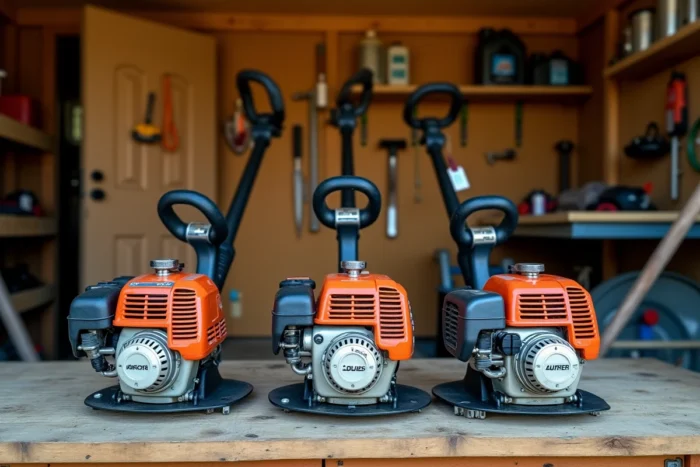
Maintenance of the thermal string trimmer: what prolongs its lifespan
A gas engine requires maintenance that electric or battery models do not impose. Neglecting these operations shortens the tool’s lifespan and degrades its cutting performance over the seasons.
The air filter should be checked before each extended session. If clogged, it weakens the air-fuel mixture and raises the engine temperature. The spark plug should be replaced according to the manufacturer’s recommendations; an engine that starts poorly or stalls under load often indicates a worn spark plug.
The fuel itself poses a common problem. An improperly mixed gasoline-oil mixture clogs the engine or causes insufficient lubrication of the piston. Ready-to-use mixing cans eliminate this risk for a moderate extra cost. At the end of the season, emptying the tank and running the engine until it stops prevents fuel from stagnating and clogging the carburetor during winter.
The cutting line and the spool head should be checked with each use. A cracked head or a jammed spool mechanism reduces cutting quality and may unpredictably project debris.
The choice of a thermal string trimmer depends on the suitability between the engine displacement, the line diameter, and the actual area to maintain. A model suited to the actual terrain costs less to use than a tool that is too powerful or too weak, because it consumes less, wears normally, and does not require compensating for its limitations with a second device.