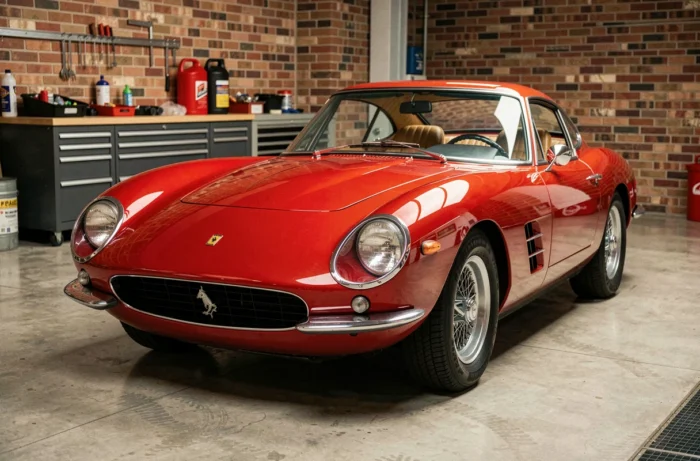
The market for exceptional classic cars displays contradictory dynamics. The amounts exchanged in the highest-end segment reach record levels, while the volume of vehicles sold remains almost stable. Understanding these discrepancies means reading a market where rarity dictates prices and where the profile of buyers is undergoing profound changes.
Average prices rising and stable volumes: the figures for the high-end classic car market
L’Auto-Journal noted in August 2026 that the total amounts exchanged in the sales of exceptional classic cars reached an unprecedented level. The average price per vehicle is rising sharply, while the number of cars sold remains almost identical.
This gap signals a phenomenon of concentration. Buyers are competing for a limited number of rare models, which drives the bids higher. Common vehicles, on the other hand, do not benefit from this dynamic.
| Indicator | Trend 2025-2026 |
|---|---|
| Total amounts exchanged (exception segment) | Historic record |
| Average price per vehicle (blue chips) | Strong increase |
| Volume of cars sold | Stable |
| Overall market (all segments) | Consolidation phase |
The distinction between the blue chip segment and the rest of the market has never been so pronounced. A documented exceptional model, with a complete history, appreciates in value. A vehicle without traceability stagnates or declines.
Specialists like Cars The Stars provide access to prestigious models whose provenance and condition are verified, a criterion that has become crucial for long-term valuation.
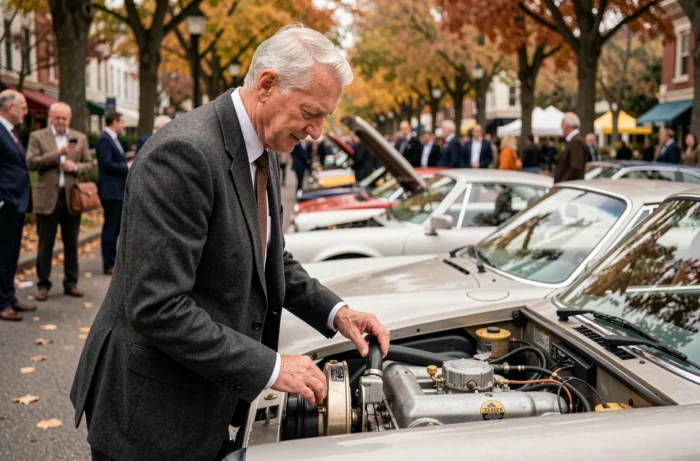
Classic cars from the 1980s to 2000s: the generational shift in demand
The imagination surrounding classic cars is transforming. The models that capture the attention of new buyers are no longer just pre-war classics or sports cars from the 1960s.
The heart of demand is shifting towards supercars and GTs from the 1980s to 2000s. Analog models, without advanced electronic assistance, offer a raw driving experience. Millennials, now active buyers, are redefining the very notion of an exceptional vehicle.
This shift has concrete consequences on prices:
- Japanese sports cars from the 1990s (long ignored by the European market) have seen their value rise significantly in recent years
- European GTs with naturally aspirated engines, produced before the widespread adoption of turbocharging, are attracting increasing demand from collectors who prioritize pure mechanics
- Limited edition models from the 2000s, with low mileage and documented maintenance, are entering the category of sought-after vehicles at auction
This phenomenon also alters the perspective of professionals. Age alone no longer determines the value of a classic car. Rarity, mechanical authenticity, and the cultural resonance of the model weigh more heavily.
Classic car registration and the end of the green sticker: regulatory constraints to know
A regulatory change that went relatively unnoticed affects all owners of vintage vehicles. Since April 1, 2024, the paper green card and insurance sticker have disappeared for all vehicles registered in France, including classic cars.
Insurance verification is now done by consulting the File of Insured Vehicles (FVA). For an owner of a prestigious vehicle, this means ensuring that their contract is properly registered in this file, or they may face difficulties during a roadside check.
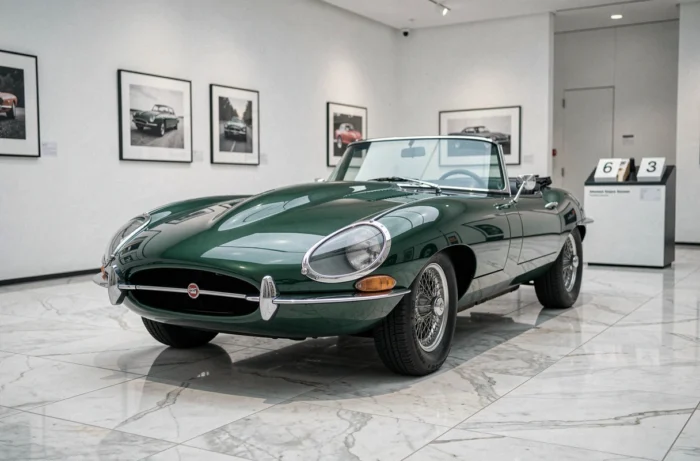
The classic car registration remains a system regulated by the FFVE (French Federation of Vintage Vehicles). It concerns vehicles over thirty years old and offers several advantages:
- Exemption from periodic technical inspection under certain conditions
- Ability to circulate in Low Emission Zones (LEZ) despite the absence of a compatible Crit’Air sticker
- Recognized heritage value that can positively influence the vehicle’s valuation
Meanwhile, the European regulation on the circularity of end-of-life vehicles (ELV), expected in 2026, introduces new obligations regarding recycling and traceability of parts. Classic cars benefit from specific exemptions, but owners must anticipate changes regarding the availability of original spare parts.
Classic car as an investment asset: what the data shows
The management of classic cars as institutional-grade assets is gaining ground. Analyses published on LinkedIn by specialized wealth managers now treat these vehicles with the same tools as fine art or fine wine.
Benchmark indices, such as those offered by Hagerty, allow tracking the evolution of valuations by model category. The segment of automotive blue chips outperforms the overall market in recent periods, while mid-range vehicles experience stagnation.
However, liquidity remains a weak point compared to traditional financial assets. Selling a classic car at the right price takes time, and maintenance, storage, and insurance costs reduce net returns. The wealth management approach is only justified for models whose rarity and authenticity are unambiguously documented.
The market for prestige and classic cars is undergoing a phase of accelerated segmentation. Exceptional models continue to appreciate, driven by international demand and a generational renewal of collectors. For others, the ongoing consolidation serves as a reminder that owning a vintage vehicle is not enough: it is the quality of its documentation, maintenance, and provenance that determines its value trajectory.