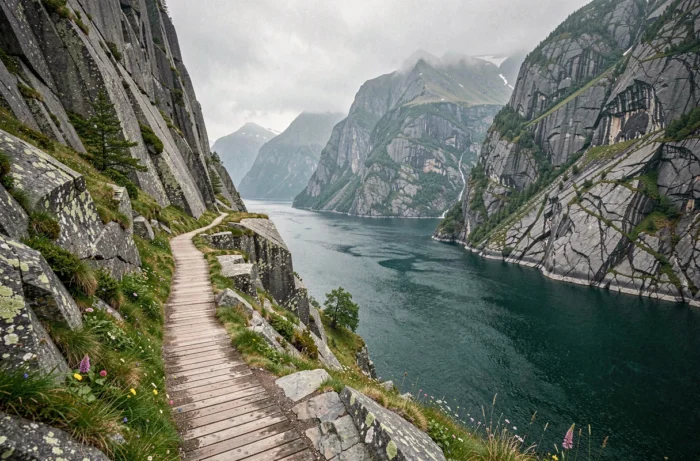
The zero-emission regulation in UNESCO fjords is restructuring the accessible routes in 2026. This change, combined with the upgrading of cruises and tourist pressure on Vestland, requires a rethink of how to explore the Norwegian fjords this year.
Zero emission rule in the Geirangerfjord and the Nærøyfjord: impact on routes
Since 2026, tourist ships operating in the Geirangerfjord and the Nærøyfjord must operate on zero emissions at the point of use: electric, battery hybrid, or equivalent. Large cruise ships have a slightly staggered schedule, but the shift is underway.
In practice, the offering is being reconfigured around small electric units. Companies that operated conventional diesel ships on these two UNESCO-listed arms are forced to renew their fleets or give up their slots. For travelers, this means quieter crossings, reduced capacities by rotation, and a need to book earlier. A comprehensive guide on Norwegian fjords to explore helps target routes compatible with these new constraints.
We recommend systematically checking the type of propulsion of the boat before booking an excursion on these two fjords. Compliant operators now display this information on their sales materials. Those who do not mention it are likely operating in other fjords not subject to the regulation.
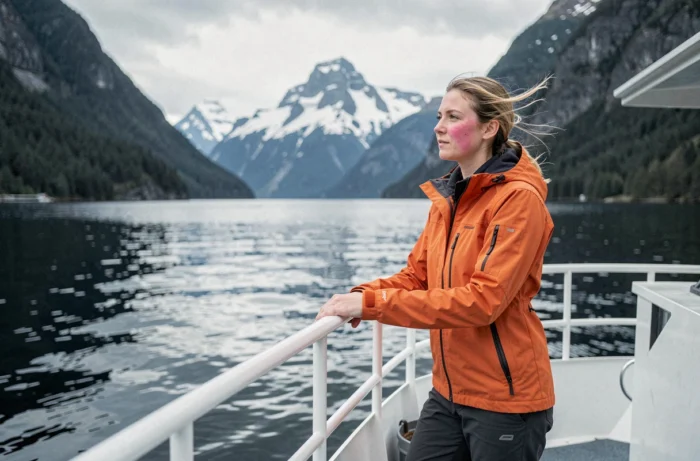
Bergen-Flåm route by road and train: the densest segment
The Bergen-Flåm segment remains the most efficient concentration for a short fjord-focused stay. We consider it the reference segment, not for its popularity, but because it combines three modes of transport in less than two days.
Train Bergen-Myrdal then Flåmsbana
The train journey between Bergen and Myrdal crosses a mountainous plateau before descending into the Flåm valley via the Flåmsbana. The Flåmsbana descends over 800 meters in altitude over about twenty kilometers, with some of the steepest gradients in the European rail network. This is not a scenic train designed for tourists: it is a commercially operated engineering railway line.
From Flåm, electric shuttles serve the Nærøyfjord and the Aurlandsfjord. The connection is smooth if you book the ferry at the same time as the train ticket.
Return via the E16 road or combined Sognefjord
The return drive via the E16 allows you to follow the Aurlandsfjord along the opposite shore. For those with an extra day, a detour through the Sognefjord, the longest fjord in the country, provides access to less frequented side arms. The Sognefjord functions like a trunk with branches (Fjærlandsfjord, Lustrafjord) offering calm stops, away from the tourist density of the Nærøyfjord.
West coast road trip: Stavanger, Lysefjord, and Hardangerfjord
The Lysefjord is earned by road, and this is precisely what filters the attendance. From Stavanger, there are two options: the ferry to Lysebotn at the end of the fjord, or the scenic road via Sirdal. The latter is longer but provides access to the summit plateau of Kjerag without going back through the quay.
Between Stavanger and Bergen, the Hardangerfjord is the logical intermediate stop. We observe that this fjord attracts a different traveler profile: fewer cruises, more car tours, and a visible agricultural tradition (orchards along the fjord). The road crosses several underwater tunnels, some of which plunge to significant depths.
- Stavanger-Lysefjord by ferry: check the availability of electric shuttles, several operators renewed their fleets in 2025-2026.
- Hardangerfjord via the Rv13: winding road with several ferries, plan for crossing times in the schedule.
- Odda-Jondal segment: access to the Folgefonna glacier, passable only in summer, road conditions vary by year.
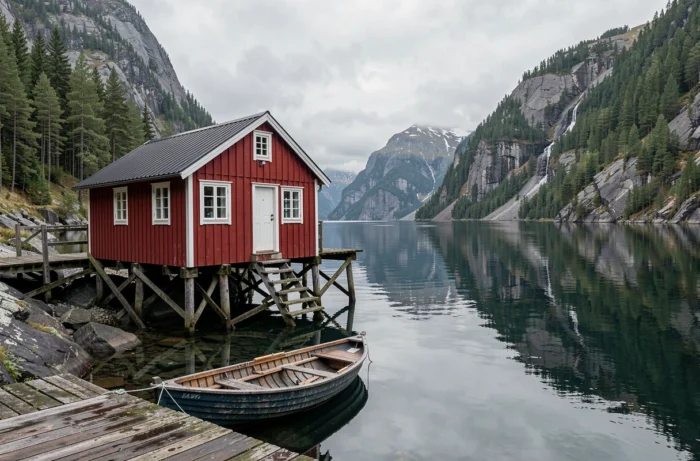
Vestland and tourist pressure: adapting your stay in 2026
The Vestland region accounts for nearly 38% of foreign summer overnight stays, according to a SSB and Visit Norway report published in July 2026. This density has concrete consequences: queues at embarkation points, saturation of parking lots at hiking departures, and an increase in the average cruise price from 84 to 115 euros per day in one year.
For travelers planning a fjord itinerary this summer, three levers allow for circumventing saturation:
- Shift the stay to the second half of August or early September: the light remains long, and attendance drops significantly after week 33.
- Favor side arms rather than main fjords: the Hjørundfjord from Ålesund or the Fjærlandsfjord from Sogndal offer comparable landscapes without the pressure of cruise ships.
- Opt for a north-south itinerary (Ålesund to Stavanger) rather than the classic Bergen-centric route, which distributes the stages across less solicited infrastructures.
Norway has also begun to introduce tourist fees at certain heavily frequented sites. Checking access fees before each stage avoids unpleasant surprises on the overall travel budget.
The choice of a fjord itinerary in 2026 relies less on the list of “must-see” fjords than on the ability to combine regulatory constraints, modes of transport, and attendance windows. A well-sequenced road trip between Stavanger and Ålesund, centered around secondary arms and new electric shuttles, produces a richer experience than a round trip Bergen-Flåm in high season.