
Choosing a connected security system to protect your home requires comparing criteria that are rarely considered side by side: software support duration, European regulatory compliance, and protocol compatibility. These parameters determine the reliability of an installation over several years, far beyond the simple choice between a camera and an alarm.
Software Support Duration and Cyber Resilience Act: What Changes for Connected Security
Since 2023, any connected device sold in France must clearly indicate the duration for which it will be kept up to date regarding security, either on the packaging or online. A manufacturer who fails to comply with this requirement faces sanctions and market withdrawal.
The framework becomes even stricter with the Cyber Resilience Act adopted in 2024 by the European Union. This regulation imposes several new requirements on manufacturers of alarms, cameras, locks, and smart home gateways.
- Report any actively exploited vulnerability within 24 hours (early warning) and then 72 hours (detailed report), which forces unprecedented responsiveness in the consumer sector.
- Produce a Software Bill of Materials (SBOM) listing all software components integrated into the product, allowing for quick identification of vulnerable software bricks.
- Ensure a minimum security update period of at least five years, integrated by default for the entire product lifecycle.
The full application of this regulation will become a condition for accessing the European market starting in December 2027, with mandatory CE marking attesting to cyber compliance. This timeline reshuffles the cards: brands offering equipment on homedome.fr must already anticipate these requirements to remain distributed after this deadline.
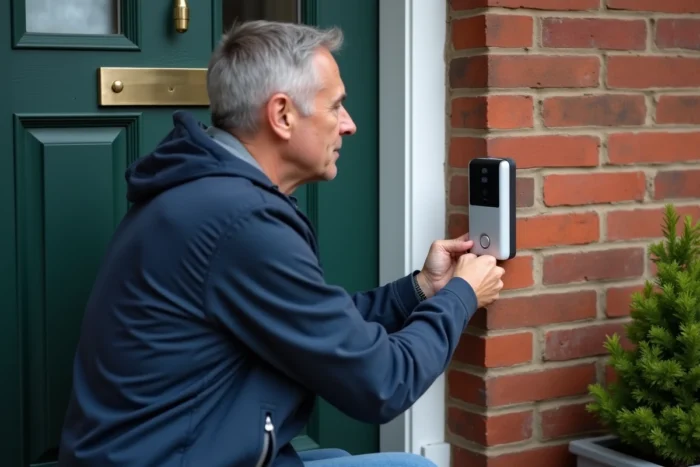
Comparative Table of Regulatory Obligations Before and After December 2027
The transition to the Cyber Resilience Act profoundly changes the guarantees that a buyer can demand. The table below summarizes the differences between the current framework and the one that will apply to all connected security solutions.
| Criterion | Current Framework (since 2023) | After December 2027 (CRA) |
|---|---|---|
| Support Duration Display | Mandatory on packaging or online | Mandatory, with a minimum of five years of updates |
| Vulnerability Reporting | No deadline imposed on the manufacturer | Early warning in 24 hours, detailed report in 72 hours |
| Software Transparency | No SBOM requirement | Complete SBOM required for each product |
| Cyber CE Marking | Not required for cybersecurity | Mandatory to access the European market |
| Sanctions | Market withdrawal possible | Market withdrawal, increased fines |
The most significant gap concerns vulnerability reporting. Today, a manufacturer can take weeks to react. After 2027, the 24-hour deadline for an early warning changes the game for homeowners exposed to zero-day vulnerabilities.
What the SBOM Changes for the Buyer
An SBOM lists every software brick embedded in a device. For a homeowner, this means that a vulnerability discovered in an open-source library used by their camera will be traceable and corrected more quickly.
Without this transparency, a device can remain vulnerable for months without anyone, including the manufacturer, knowing precisely which components are affected.
Communication Protocols and Interoperability of Security Equipment
Beyond regulation, compatibility between devices remains a crucial technical criterion. A connected alarm, a lock, and a motion detector do not always communicate via the same protocol.
The most common protocols in residential security (Wi-Fi, Zigbee, Z-Wave, Thread) do not offer the same characteristics in terms of range, energy consumption, and the number of devices supported on the same network. A poorly designed heterogeneous system multiplies gateways and creates points of failure.
The Matter protocol, designed to unify smart home technology, is beginning to be adopted by several manufacturers of locks and sensors. However, surveillance cameras remain predominantly on Wi-Fi due to the bandwidth required for video transmission.
Check Compatibility Before Purchase
Before investing in a connected security solution, three points deserve verification:
- The protocol used by each device and the necessity (or not) of a dedicated gateway to connect them to the home network.
- Compatibility with voice assistants or smart home platforms already installed in the home.
- The possibility of firmware updates via the network, a prerequisite for meeting future obligations of the Cyber Resilience Act.

Private Property Video Surveillance: GDPR Constraints Not to Be Underestimated
Installing a connected camera at home does not exempt compliance with the legal framework. A camera aimed at the public road or a neighbor’s property exposes one to sanctions. The field of vision must be strictly limited to the private property of the holder.
Recordings must be protected against unauthorized access, and the retention period remains regulated. Informing visitors of the presence of a video surveillance device, through visible signage, remains an obligation often overlooked during self-installations.
This regulatory point weighs in the choice of a connected security solution: a system that stores video streams on a remote server must ensure GDPR-compliant hosting, which effectively excludes certain non-European providers that do not have data centers within the EU territory.
The combination of the Cyber Resilience Act and GDPR rules outlines a framework where regulatory compliance becomes a selection criterion as crucial as price or features. Equipment that does not meet these conditions by December 2027 will simply disappear from European shelves.